RADIOPHARMACEUTICALS
Exploring protein targets visually
What are radiopharmaceuticals?
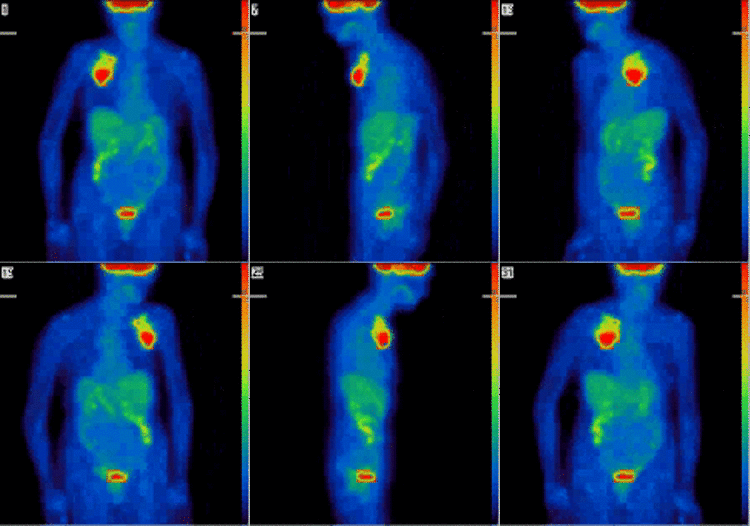
Radiopharmaceuticals are a group of drugs consisting of radioactive isotopes and tracers that emit radiation and allow doctors to see where an atom goes in the body and how it behaves. The process of replacing atoms with a radioactive atom is called radiolabeling. There are different ways to produce radiopharmaceuticals, including radionuclide generators, cyclotrons, and nuclear reactors.
You can find an inspiration for our project here.

Research question:
Which receptors are most commonly targeted by radiopharmaceuticals, and how do their binding selectivity profiles vary?
Method
How were radiopharmaceuticals identified?
Radiopharmaceuticals were found from the ChEMBL endpoint using their Anatomical Therapeutic Chemical (ATC) classification codes. Compounds with ATC codes beginning with V09 (Diagnostic radiopharmaceuticals) or V10 (Therapeutic radiopharmaceuticals) were selected for this project.
When looking for radiopharmaceuticals linked to their relevant receptors, only three molecules had data. The absence of data is likely due to the difficulty of obtaining this biological information, as assays for radioactive molecules are expensive and complex. However, attaching a radioactive atom usually does not change the binding pharmacology or affinity of the compound to its receptor. Thus, the radiopharmaceutical's binding affinity and selectivity to receptors can be equivalent to its "parent" molecule, or the non-radioactive version. Thus, all downstream analyses were based on the parent molecule’s binding data.
How were primary targets for parent molecules determined?
Ki is the inhibition constant, which defines how tightly a molecule binds to a protein. A low Ki means strong binding, while a high Ki indicates weak binding. Ki values are commonly used in drug discovery to quantify ligand–protein interactions and discover which proteins the parent molecule prefers.
Primary targets were defined as the proteins with the lowest Ki (best binding). Secondary, or off-targets, were defined as proteins with higher Ki.
How was target selectivity quantified?
Selectivity quantifies how much better a molecule binds to its primary target compared to its other targets. The selectivity ratio was determined by dividing the Ki of the target by the minimum Ki value:
To visualize the target selectivity for parent molecules, we plotted log-transformed affinity values (log(1/Ki)) to emphasize the primary target, which appears as the tallest bar in the chart, and the off-targets in decreasing order.
Selectivity ratio = Ki,target / Ki,min
| Selectivity ratio | Interpretation |
|---|---|
| 1.0 | Primary target, strongest binder |
| < 1 | Off-target, weaker binding |
| Large ratio | Highly selective binding; large preference for main target |
| Small ratio | Weak selectivity; the molecule binds to proteins almost equally well |
Results
The knowledge graph was used to visualize relationships between radiopharmaceuticals (yellow nodes), their parent molecules (blue nodes), and the protein targets (pink nodes) they bind to. The edges represent binding relationships where each parent molecule is connected to its protein targets, and each radiopharmaceutical is linked to its non-radioactive parent molecule.
Some protein targets appear multiple times, connected to different parent molecules:
- Carbonic anhydrase isoforms (I, II, IV, IX) linked to sodium iodide and sodium fluoride
- Carbonic anhydrase II links sodium iodide and sodium phosphate
- Beta amyloid A4 protein targeted by flutemetamol and florbetapir
Others are specific to a type of protein:
- Monoamine transporters (dopamine, serotonin, norepinephrine) linked to iodine 2β-carbomethoxy-3β-(4-iodophenyl)-tropane
- Dopamine receptors (D1, D2, D3, D4) only targeted by iolopride
Thus, the knowledge graph shows that radiopharmaceuticals target a limited category of proteins, illustrating their selectivity for specific biological functions.
Sodium Phosphate
- Targets: carbonic anhydrase (CA) isoforms
- Best target: CA IV (Ki = 9800, which is around 10 µM), with other targets hundreds to thousand-fold weaker.
- Interpretation: Sodium phosphate shows weak interactions with carbonic anhydrase isoforms, consistent with its role as a physiologic ion rather than a targeted receptor ligand.
Ammonia Solution (strong)
- Targets: Unchecked
- Best target: 1.4×10⁶
- Interpretation: Ammonia indicates low affinity with no clear protein targets. Clinically, it is used to measure blood flow and used to diagnose diseases like coronary artery disease. Uptake of N-13 ammonia depends on transport and metabolic conversion for imaging.
Sodium Fluoride
- Targets: Unchecked, Trypanosoma cruzi, Astrosclerin-3, CA
- Best target: Unchecked. Everything else has very weak binding with CA orders of magnitude weaker.
- Interpretation: Sodium fluoride shows poor affinity to protein targets. Fluoride uptake in bone is characterized by bone mineral chemistry with inorganic interactions with hydroxyapatite, not receptor binding.
Sodium Iodide
- Targets: Trypanosoma cruzi, Unchecked, CA isoforms, Astrosclerin-3
- Best target: Trypanosoma cruzi (Ki = 44,000)
- Interpretation: Best target still has weak affinity. Iodide uptake is regulated by iodide transporters and the thyroid, not protein interactions.
Florbetapir and Flutemetamol
- Targets: Beta amyloid A4 proteins
- Best target: Beta amyloid A4 proteins
- Interpretation: High affinity for beta-amyloid. This is consistent with clinical use, as Florbetapir and Fluetamol are designed as amyloid PET tracers with high target specificity.
Iodine (124I) 2β-carbomethoxy-3β-(4-iodophenyl)-tropane
- Targets: Dopamine, serotonin, and norepinephrine transporters
- Best target: Dopamine and serotonin have identical Ki, norepinephrine is only 2.5-fold weaker.
- Interpretation: The tracer binds to monoamine transporters with high affinity but almost equal selectivity.
Iolopride
- Targets: Dopamine receptors
- Best target: D2 with high affinity
- Interpretation: Iolopride has high selectivity for dopamine receptors, with a strong selectivity for D2 and D3 receptors over others.
Inorganic radiopharmaceuticals (Na⁺, F⁻, PO₄³⁻, I⁻) show relatively weak and non-selective binding to protein targets. This is validated by clinical uses, as their uptake is regulated by transporters and pumps, rather than receptor interactions. Designed PET tracers, such as Florbetapir F-18 and Flutemetamol F-18, showed high affinity for beta-amyloid, while Iolopride preferred D2 receptor binding. Iodine (124I) 2β-carbomethoxy-3β-(4-iodophenyl)-tropane had affinity for monomaine transporters with limited selectivity to the specific type. Thus, the results show that the chemical composition of radiopharmaceuticals determines the selectivity and affinity to certain targets, and reflects a range from non-specific inorganic tracers to highly optimized, target-selective ligands.
References
IntechopenNational Library of Medicine
The End!